
Tiny Altars Everywhere
Living Wild Creativity Practice

These places are where the creators, Gods, deities and powerful beings live.
—Ofelia Zepeda, from “The Home of the Sacred”
Hello Lovelies—
Buckets of gratitude for reading A Woman’s Place Is In the Wild. I appreciate all of you who sustain and help me grow these weekly meditations by reading and commenting or sharing and supporting my work with a paid subscription. Your generosity means the world to me. Thank you for being here.
Did you know you can LISTEN to A Woman’s Place Is in the Wild? Click the play button on the upper right of your screen when you go to the page of this post.
Each weekly meditation of A Woman’s Place is in the Wild is an offering, an evocation of the world around me. You will rarely find me writing about climbing to the top of a mountain or counting the miles I’ve walked as if collecting notches on a belt.
Instead, I want to adventure in.
This is the kind of nature writing needed now, narratives of place—localities, with its root in the Latin, locus, for place—the kind that rise over time out of relationship, that allow us to understand that we are place, too. As the Scottish writer, Nan Shepherd says, “The first law of ecology is that everything is connected to everything else.”
Waxing Moon, Sininen Kuu, Blue Moon - Spring
Spring unfolds on the mountain.
After the snows last week, the forest takes a long deep drink, sighs, and exhales dandelions and tiny purple Townsend daisies. As anticipated, moss opens leaflets lighting small green fires along the hillsides. While the Front Range is moving headlong into summer, mountain spring is just becoming.
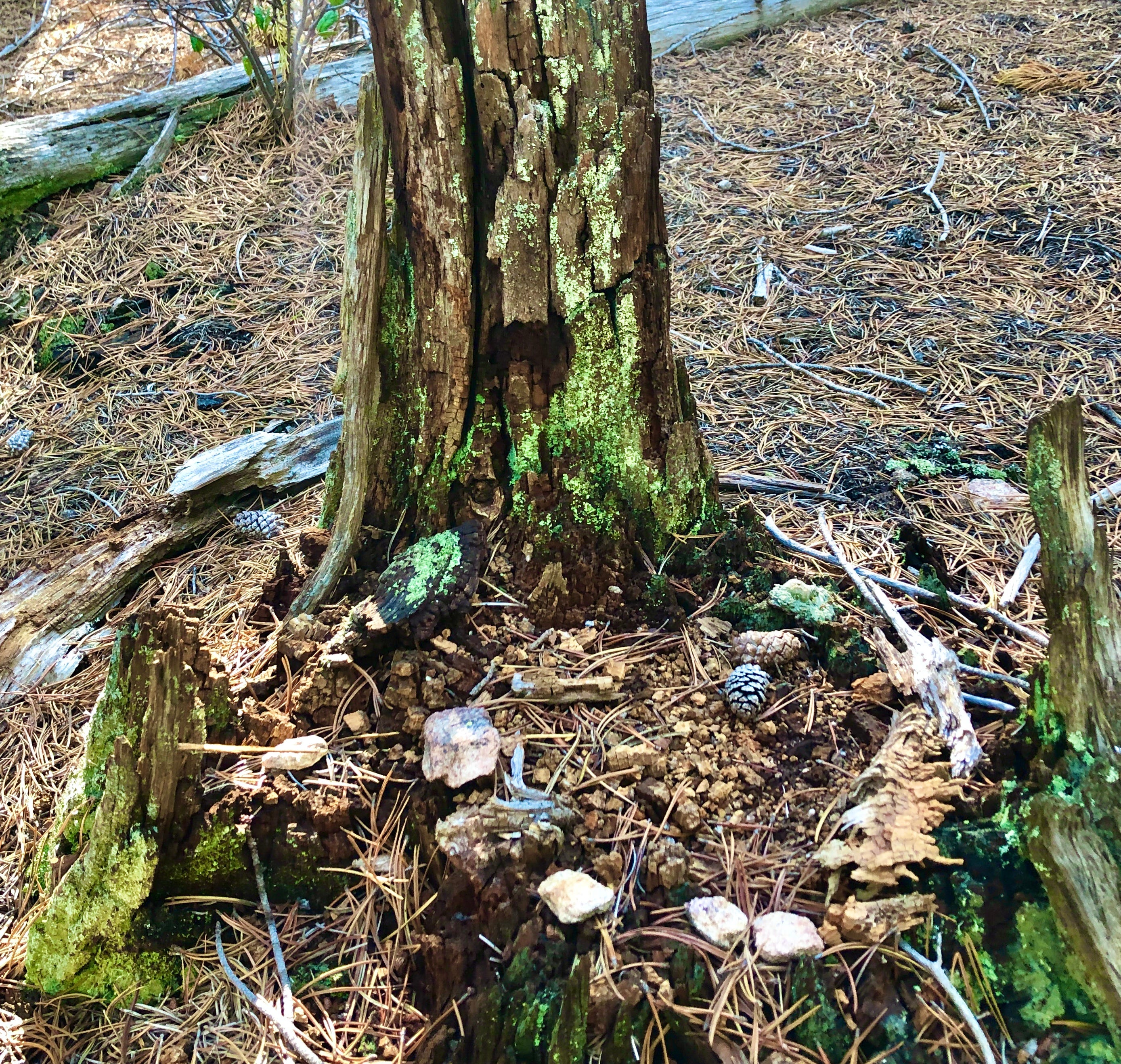
Yuki and I walk the circled path through the woods, stopping at places where little altars take shape at the base of trees or stumps or have formed from stones emerging from earth or spiraled into a clearing.
Some I’ve helped to make with my own hands; others have been shaped by elementals—earth and air, stone and root. I see them everywhere now—places that bloom with a certain wild magic.
These are not the altars of my Catholic childhood, where the dais was inhabited by priests austere in their white albs and where I once imagined I saw God in the incandescence of the candles framing the space.
Instead of marking the place where heaven touches earth, as my catechism lesson taught, these tiny altars are where earth is revealed as both living and sacred; the divine and the earthly are not separated or opposite, but intertwined and alive.
As a child, I’d lie awake in bed at night, trying to imagine heaven—that cloud-filed elsewhere—and cry. I did not want to spend eternity in such a place. Instead, I wanted to roll myself in the dirt. I understood earth to be holy and in my own version of communion, licked the sidewalk when I was a child. I still love the feel of earth between my fingers and beneath the soles of my feet.
I have only ever wanted to cloak myself in the mystery of the forest, in the light on aspen leaves, in scent of dirt after rain. How lucky I feel to be able to live where I do and to be able to touch these elementals each day.
I began making altars in the land in answer to a call, an instinct to make visible what I already understood as sacred and holy. At first, I was trying to entice what the ancient Finns call haltija, the spirits who dwell in rocks and trees and other forest places.
I remember a story my father told about dwarves who came out at night but froze mid-gesture at the first light. He took us to a wooded ravine to show us the story was true and there, indeed, were a dozen figures caught mid-tumble or chop, frozen in place among the the ivied undergrowth of the forest.
I have long carried the wonder of that moment with me.
So when Greg placed an earthen-colored toadstool with a tiny door along the path that led into the woods, then another over-turned pot with a crack for a door, I sometimes left little gifts for the haltija who might find a home there.
But what started as whimsy, grew. Last year, as part of the lineage work I have been doing, I made an altar for my ancestors in the place where my mother’s ashes are buried beneath the large ponderosa that marks the edge of the yard beneath the Buddha head that belonged to her. There, I laid a bowl of stones filled with water, the icon of an owl that survived my house fire, and crow feathers.
I imagined the altar as the place where the spirits of my mothers gathered, a place where they touched the daylight world.
Something shifted then.
Perhaps it was the deep time I had with the land both pre- and post- last year’s surgery, perhaps it was that first altar in my garden, but suddenly the forest opened to me in a new way. I saw tiny altars everywhere and my morning meditation expanded to include offerings to each new day. I greet the sunrise, the birds, the haltija, my ancestors, and especially the trees, the guardians and the strength of this place.
In return, the forest began to reveal her secrets.
Suddenly I saw little “glimmers” on my walks: the magic of tall S-curved pine, the mystery of the hollowed base of a lightning struck tree or the way a filled in fire pit grew a tableau of moss and lichen-covered rock, each an altar, a place where the sacred has been made visible.
In acknowledgment, I began to help form them, placing rocks and bark, offering pinecones and feathers. One emerged into a heart shape, another a simple ring at the base of a tree. Recently I discovered a perfect raised dais at the base of an old stump, one I had not shaped.
These places mark the meeting point between the known and the unknown, between the human and more-than-human. They are places of mystery as much as magic, places where the forest speaks in the language of earth and stone and shape.
Now each day into the forest is a pilgrimage, each walk a way of praising the wild world.
This act is an act of reciprocity. The forest holds me and and I her.
There is power in this.
When we take the time to make sacred our world, we help to shift perception, to awaken something that has been forgotten. To recognize the beauty and awe and wonder of the natural world the most holy thing we can do.
This week’s creativity practice, for paid subscribers, invites you to make altars of your own.
Hold onto beauty, friends, and to each other. Carry hope. And practice being human, practice loving the earth and each other, each day.
Thank you for reading.
Big love,
Karen
Please click the heart if you appreciate this post and of course, feel free to restack or share with friends.
A Writer’s Note: If these this have brought you outside, or made you stop and look at the beauty of the natural world, please consider becoming a paid supporter. Doing so keeps this work alive.
You can also purchase a copy of Rough Beauty: Forty Seasons of Mountain Living here. or order a personalized first-edition here.
For access to the Creativity Practice below, please become as subscriber.
Writing Wild: Writing the Language of the Land
5 Spaces Left
Rollinsville, CO
Space Limited to 8 Women
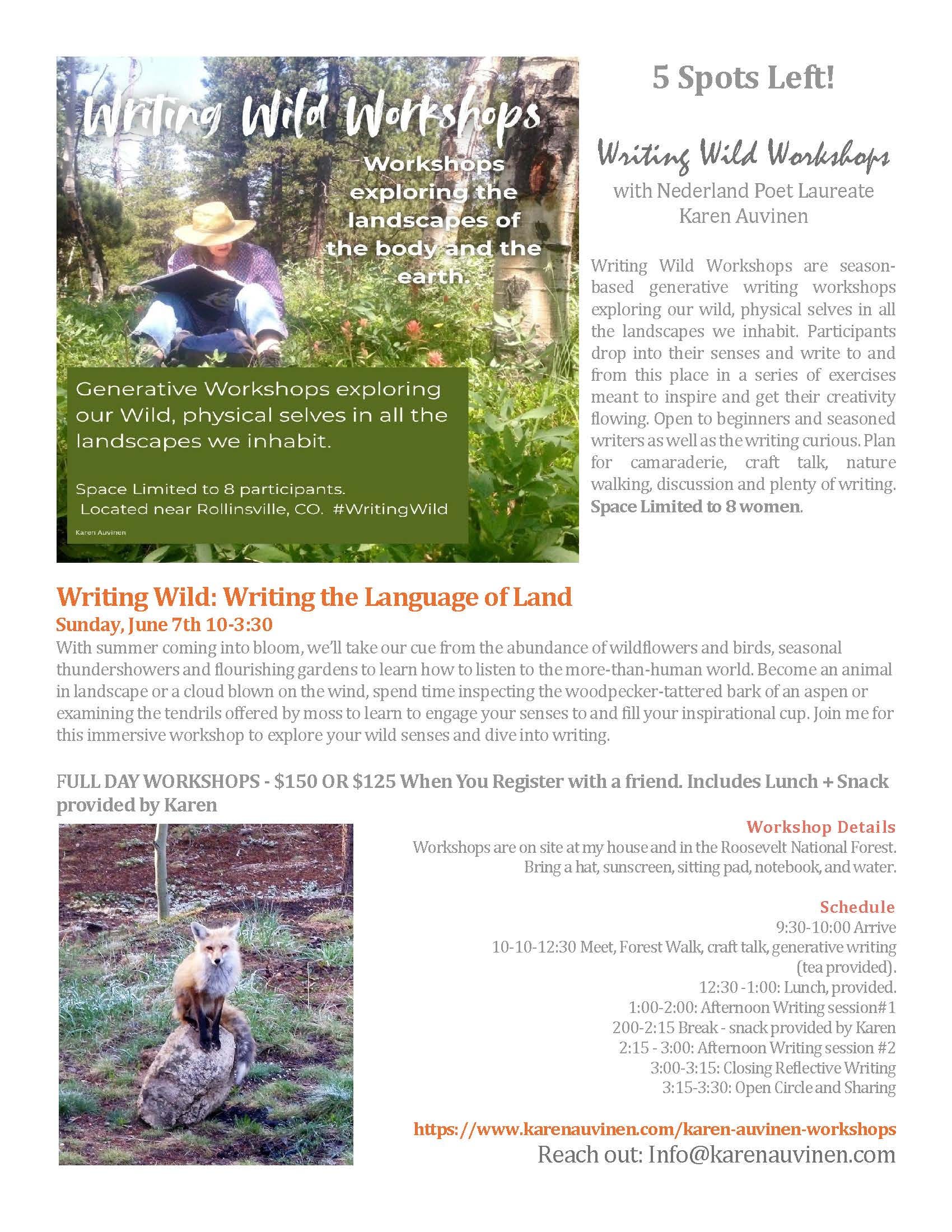
Full Day Workshop - $150 or $125 when you sign up with a friend.
Lunch + Snack included.
For More Information or to Register
Living Wild Creativity Practice: Tiny Altars Everywhere
This practice helps you to deepen your relationship with wildness and make sacred your own world.
